Design & analysis
Target: finish the current design and analysis phase, with remaining findings carried into build reviews.
In progress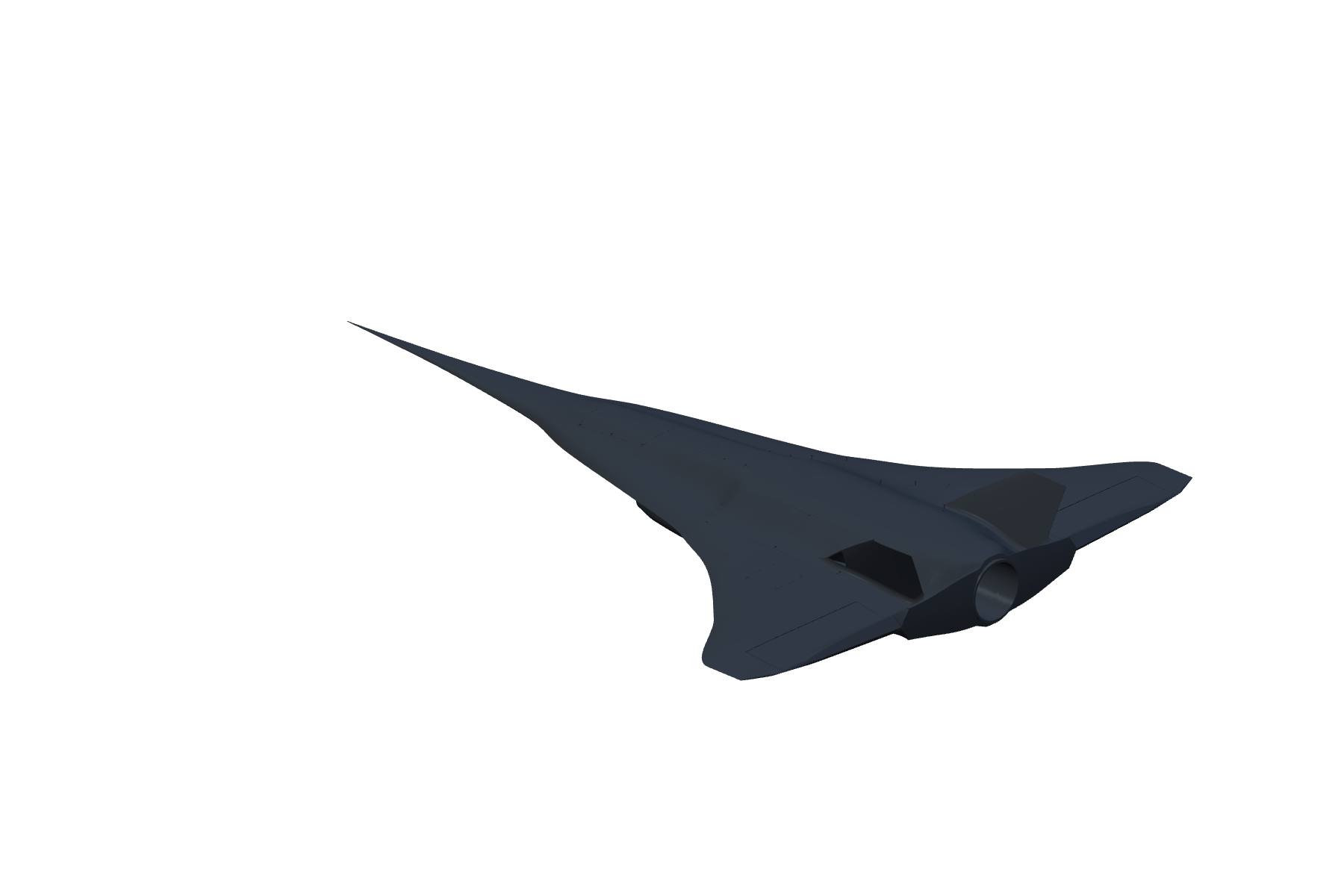
Design & development
Why I’m building Manta
XT-1 Manta · Experimental Turbine–1
I want to see how far we can take an idea with the tools, knowledge, and determination we have.
I’ve worked with some of the world’s largest aerospace and defense prime contractors. That experience is part of what I bring to Manta, but the inspiration I keep returning to is the early Skunk Works era. I’m drawn to the image of engineers working with slide rules, staying close to the hardware, and moving quickly from an idea to something they could test.
Manta is my way of carrying that spirit into an independent aircraft project. I want to take on a problem that stretches what I know and demands more of me as an engineer. Every part we make and every test we run is a chance to find out where our understanding holds up, where it falls short, and what we need to learn next.
Mach 1 is the goal because it feels difficult and distant enough to demand that effort. Reaching it will take more than ambition. It will take patience with the details, honest results, and the willingness to keep working when a design has to change.
I want to leave behind an aircraft I’m proud to have built and a record of the work that others can learn from. I want to know that we gave a difficult idea everything we could, and that we went further because we were willing to try. That is what makes this worth doing.
An invitation to try
Boom Supersonic’s challenge gives this pursuit a tangible goal: an amateur-built, remotely piloted, air-breathing aircraft that flies beyond Mach 1, lands intact, and repeats the feat the same day.
The money is not what drives me. What matters is the challenge of making something extraordinary with the resources we have, and finding out how far we are willing to go to make it work.
Read the official Boom Prize challengeChallenge details checked 20 November 2026. Manta is an independent personal project. Prize eligibility and participation remain to be confirmed.
The aircraft
Exterior views from the design record.
Drag the aircraft to look around.
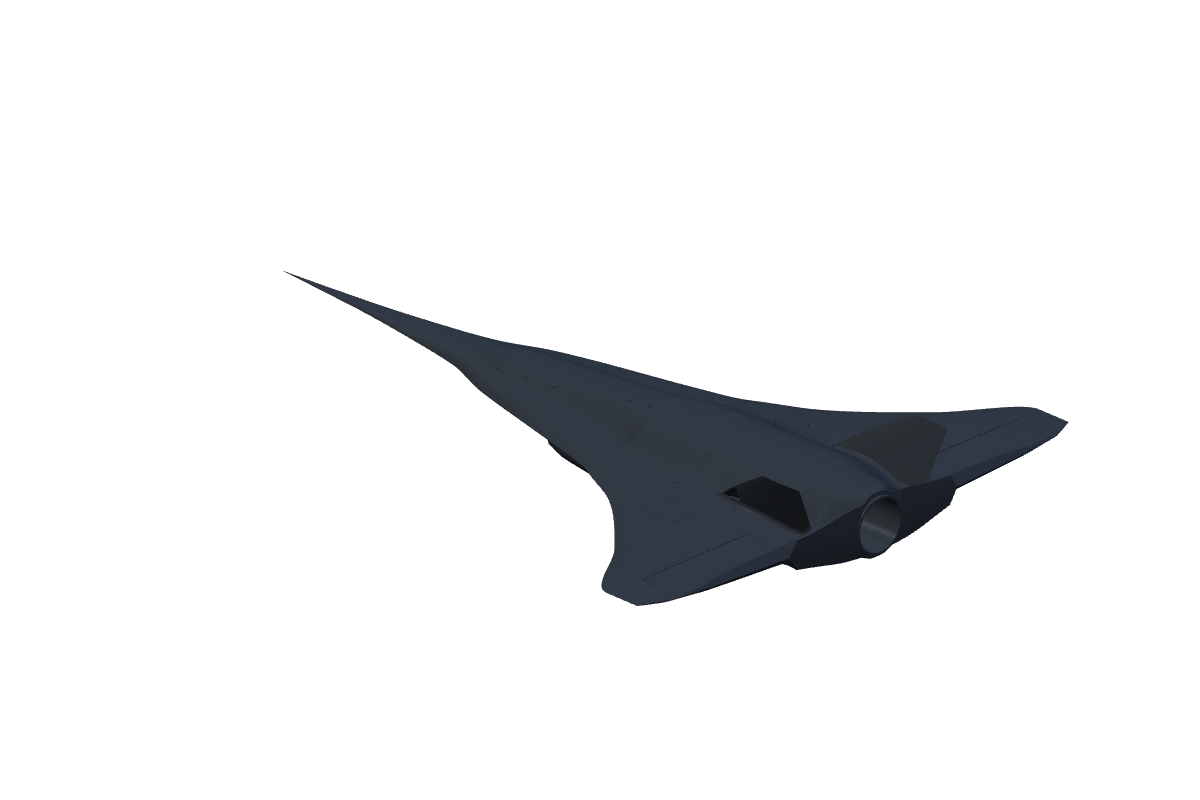 Drag to rotate
Aft-quarter view
CAD rendering · Neutral display poseNovember 2026 — October 2027
Our target schedule. Each test stage depends on the results and readiness of the aircraft; dates may move.
Flight milestones have not yet been demonstrated. Planned dates are objectives, not flight clearances.
Analysis notebook
Selected views from the analysis record.
Simulation is part of the development work.
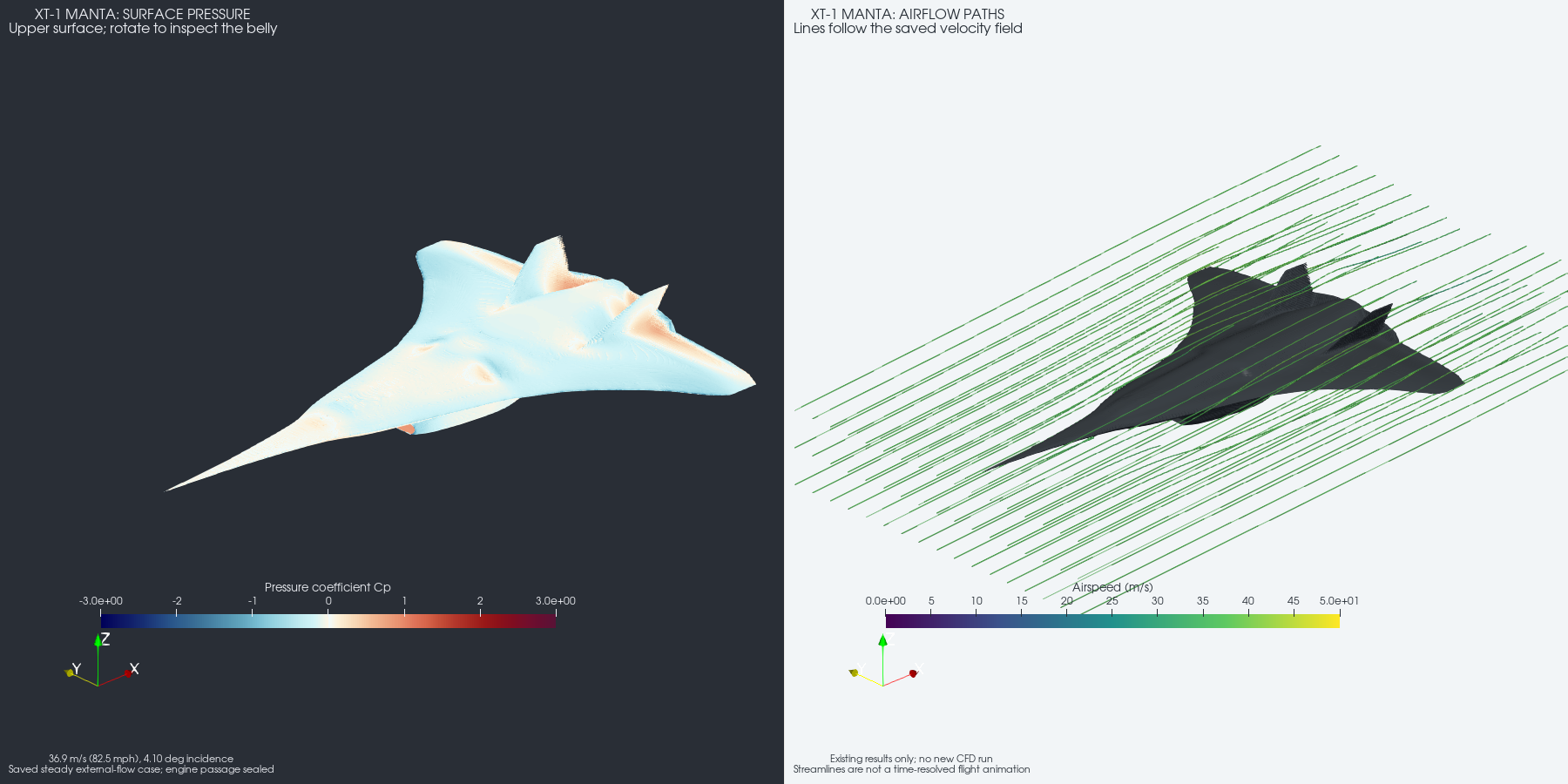
Low-speed, engine-off analysis. Moving markers follow a saved steady flow field; this is not flight footage or a supersonic simulation. Visualization recorded 18 November 2026.
Project record
Brief notes at significant checkpoints.
The development schedule now sets targets for a printed prototype, composite builds, and a staged flight program through October 2027. Progress will follow the test evidence.
The next analysis check is underway. Findings will be recorded after review.
The project record and development priorities have been consolidated. Mach 1 remains the objective, with stable flight and 200 mph as intermediate milestones.
A dated copy of the aircraft design has been saved as a reference for ongoing development.
Contact
For questions or correspondence about XT-1 Manta:
charles_medina2@outlook.com